Dignity-based storytelling shows the people at the center of a cause as the authors of their own lives, not as objects of rescue. We refuse the savior frame because it is inaccurate and it does not last: pity asks an audience for a feeling, while dignity asks them for a partnership. Our tagline, "Stories make us HUMAN™", is a promise to tell the second kind of story.
Every organization working on poverty, health or rights eventually faces the same edit. There is a shot of a child looking into the lens, a swell of strings, and a line of copy about what your gift can do for her. It may work for a quarter. Then the audience learns to scroll past it, and the people in the frame are left carrying a story about themselves they never chose. Our work over the past decade has been an argument for a different cut.
What is the white savior trope in nonprofit storytelling?
The savior trope is a story structure in which the donor, the visitor or the institution is the active hero and the community is the passive backdrop that needs saving. You can spot it by asking who moves in the film. If the people from the place being filmed only receive, wait or suffer, while someone from outside arrives with the solution, the frame has already decided who matters.
The trope is tempting because it is simple, and simplicity sells. It also quietly misrepresents how most good programs actually work. When we made I Promise You with Pencils of Promise, the brief itself pushed against it. Pencils of Promise does not hand schools to communities; it builds them with communities. One of the objectives we wrote for the film was to "Elevate Partnership Over Charity", and the filming in Ghana and Guatemala followed from that. The community vignettes show girls making reusable menstrual pads, boys building safe water filters and parents mixing concrete. Nobody in those scenes is waiting to be rescued. They are working.
How do you tell poverty stories with dignity?
You tell them through one person's agency, observed patiently, with the system in the background rather than the foreground. In practice that means choosing a protagonist who is doing something, letting the camera stay long enough to see competence, and resisting the score that tells an audience how to feel.
Our work for the World Bank's Partnership for Economic Inclusion is the clearest example we have. The program is vast. The World Bank's 2024 State of Economic Inclusion report found that economic inclusion programs reach just over 70 million people across 88 countries, about 10 percent of the world's roughly 700 million people in extreme poverty. Numbers at that scale are true and almost impossible to feel.
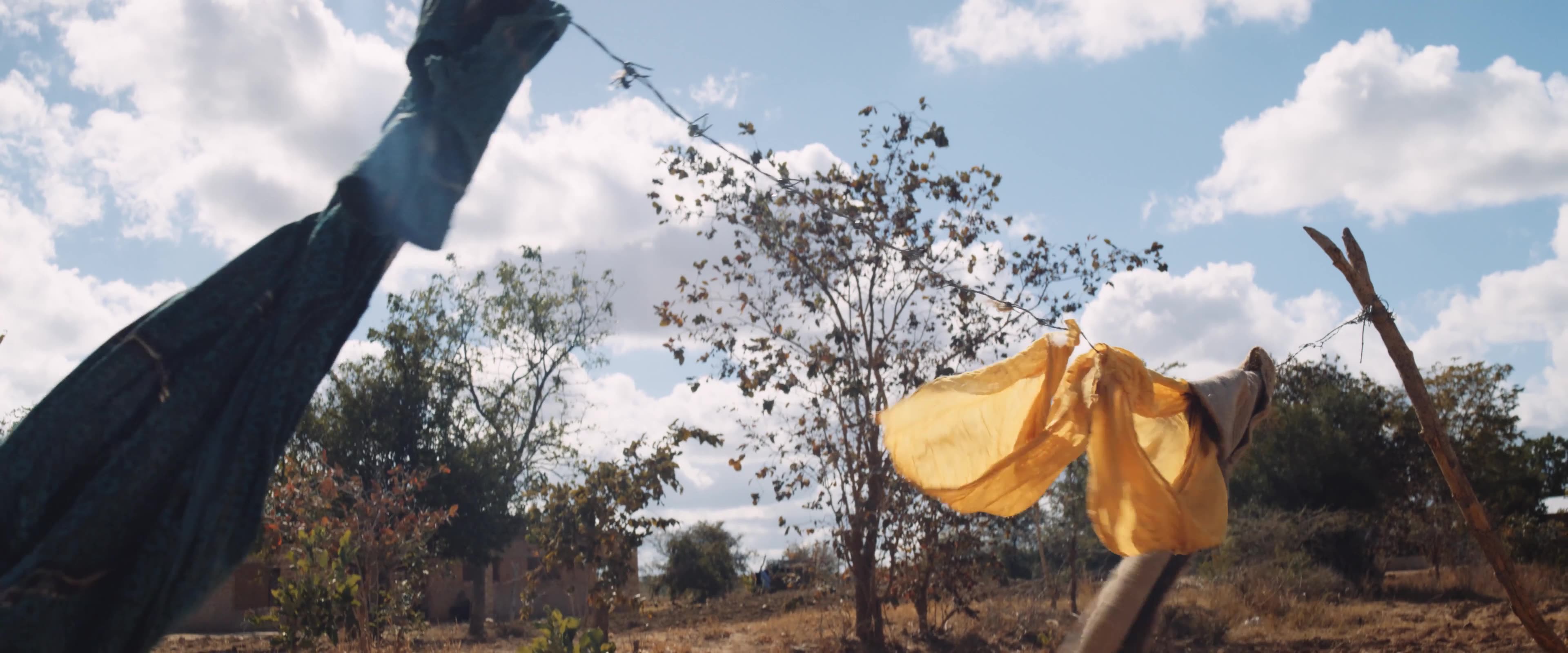
So the companion documentary, Foundations for the Future, stays in Zambia with one family. Fitness is a mother, an entrepreneur and a member of a community savings group. Her daughter Venus carries the emotional arc, and a field staff member, Bridget, connects the household to the wider program. We embedded through the rhythm of Fitness's day: work, caregiving, savings meetings. Natural light, a patient camera and a minimal score let the change read as accumulation rather than a dramatic before and after. The objective we wrote at the start was four words long: "Elevate Dignity Over Pity."
Pity asks an audience for a feeling. Dignity asks them for a partnership, and a partnership is what keeps the work going.
The anthem film that sits beside it carries the scale, framing inclusion as investment and nation-building rather than aid. One film gives the institution its argument. The other gives the argument a face that belongs to someone, with a name, a business and a daughter with plans of her own.
What is "poverty porn", and why does it persist?
"Poverty porn" is the shorthand critics use for imagery that exploits suffering to provoke a quick emotional reaction, usually a donation, at the expense of the subject's dignity and context. It persists because it is fast to produce and easy to measure in the short term.
The cost is harder to see. In our experience audiences build up a tolerance, so each campaign has to escalate. The people depicted become symbols of need in the public imagination. And staff inside the organization, who know the communities as colleagues and partners, stop recognizing their own work in their own marketing. After I Promise You launched, by our account, staff across Pencils of Promise's regions cited it as a defining picture of their mission, grounded in the real, daily work they do.
The same instinct applies well beyond international development. With Bristol Myers Squibb, the brief for LIVING was to give patients the space to tell their own stories of overcoming disease, with no product in the frame. We filmed in China, Sweden, France and the United States, and alongside the film we rejected the staged, sanitized look of pharmaceutical photography in favor of unguarded portraits of real patients. In 2023, Ragan's Video, Visual and Virtual Awards gave LIVING its Grand Prize for Best Overall Video. An award is not proof of ethics, but it is a reminder that dignity costs a film nothing in craft.
How should NGOs portray the communities they serve?
As people with their own leaders, their own traditions and their own reasons for acting, filmed with their collaboration rather than merely their permission. The question to ask in every edit is whether the community would recognize itself, and whether it would be proud of how it was seen.
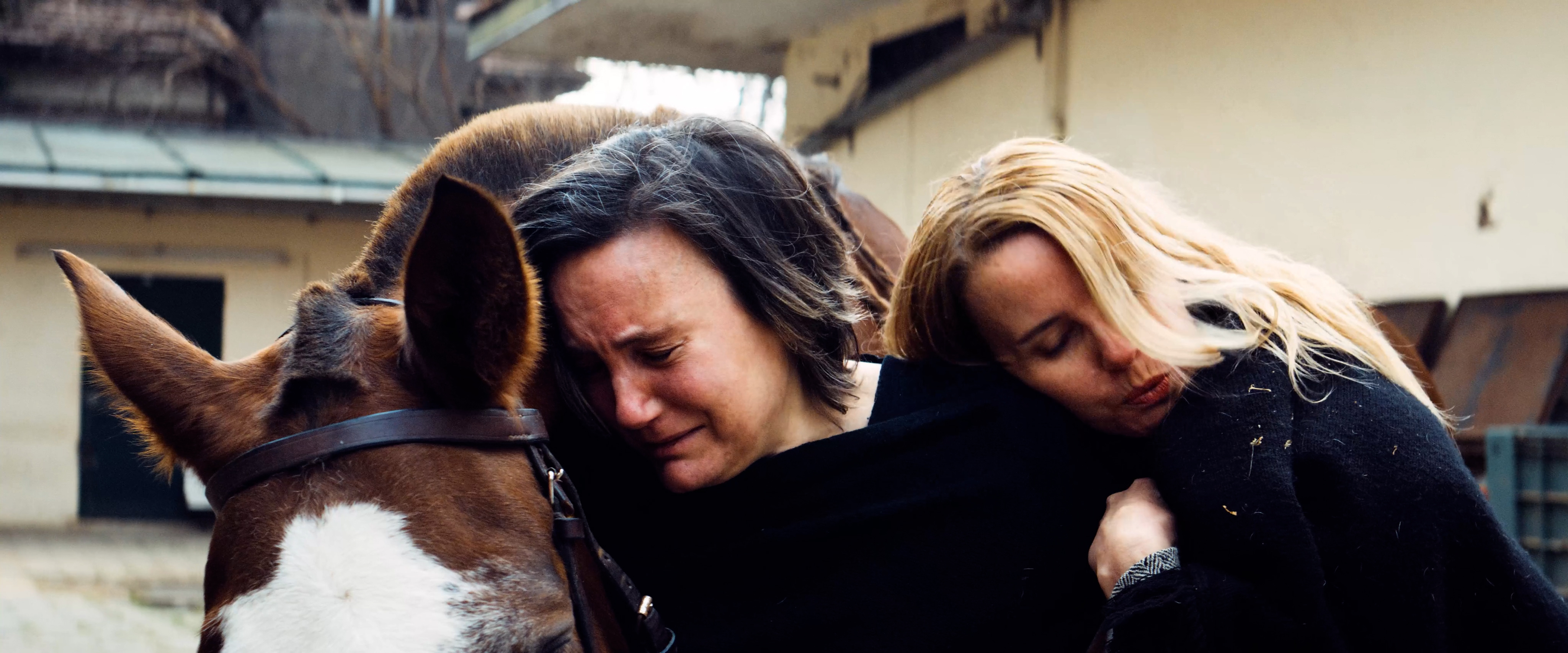
In 2020 we made Ride to the Polls with Protect the Sacred and Diné leaders. It follows Indigenous riders crossing their ancestral lands on horseback to vote, guided by the tradition of "horse medicine". The ride was their act. Allie Young, the founder of Protect the Sacred, organized it and rode with a group to Kayenta, Arizona, to cast her own early ballot, as CNBC reported that October. The film is voiced by community leaders. Our job was to shoot it on location in the Navajo Nation with the care it deserved, blending vérité, drone and portrait work, and to get out of the way of a story that was never ours to own.
None of this makes us perfect at it. Every project involves choices about who is centered, who is cut and whose words carry the ending, and we do not always get those choices right on the first pass. The commitment is to keep asking the question in the edit suite, where it matters most. Our homepage says we tell "stories that support flourishing humans on a flourishing planet." Flourishing is something people do for themselves. A film can honor that, or it can cover it up.
Questions people ask
What is dignity-based storytelling?
Dignity-based storytelling portrays the people at the heart of a cause as capable agents in their own lives rather than as victims awaiting rescue. It favors observation over spectacle, names over statistics and partnership over charity. The goal is a story the subjects themselves would recognize and stand behind.
Does dignity-based storytelling raise less money than emotional appeals?
Pity appeals can produce a quick response, but in our experience they wear out as audiences grow numb to them. Dignity-forward films describe the work accurately, so they can keep being used across donor events, policy briefings and staff training. Our films for Pencils of Promise and the World Bank were built for exactly that kind of long use.
How do you show the scale of a global program without reducing people to numbers?
Pair two films. Let an anthem film carry the scale and the institutional argument, and let an observational portrait of one person or family carry the truth of what the program means on the ground. That is the structure we used for the World Bank's Partnership for Economic Inclusion in Zambia.
If your organization wants to tell its story this way, apply to work with us.