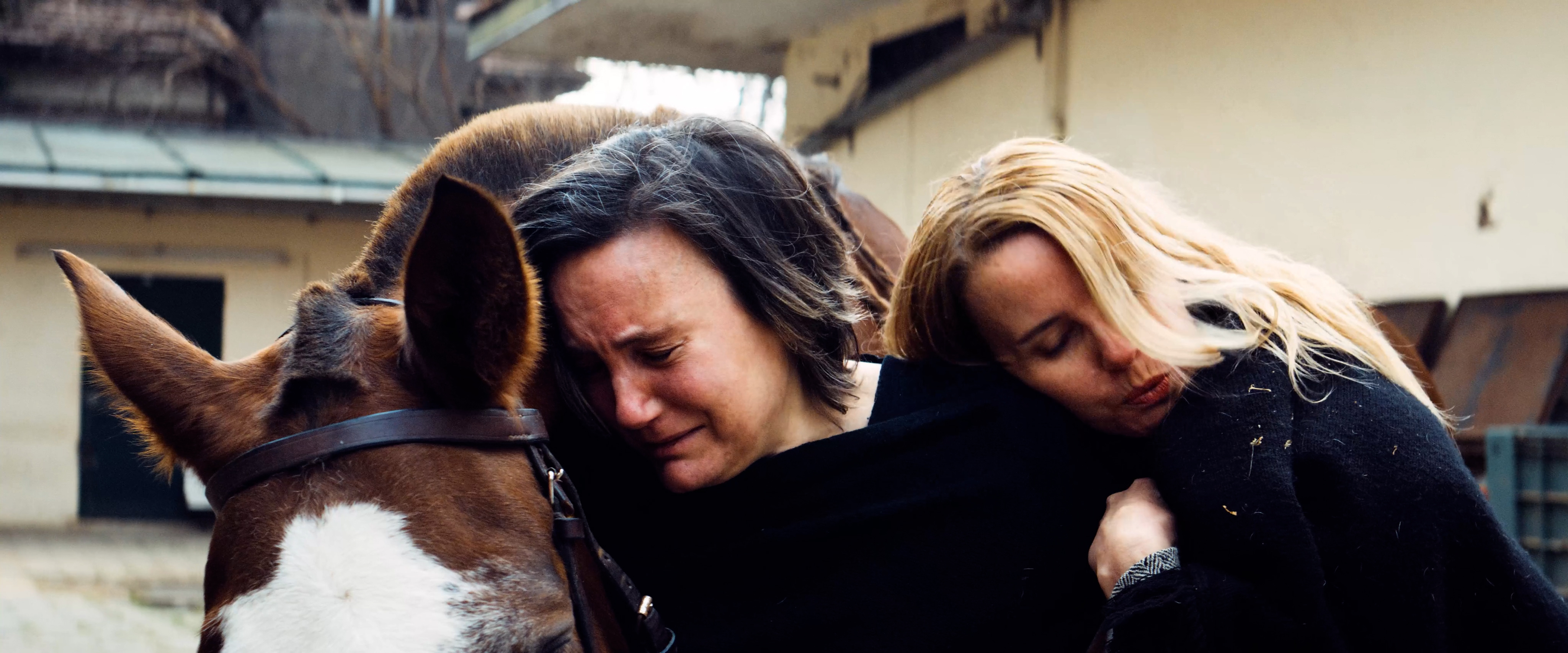
The surest way we know to make a campaign video travel is to design it for the people who will pass it on. With #Virada13, our two-minute film for Brazil's 2026 presidential runoff, the film was half the work. The other half was a bilingual hub that turned every viewer into a distributor.
Brazil voted in its presidential runoff on Sunday, 25 October 2026. Lula won with 51.78% of the vote to Flávio Bolsonaro's 48.22%, according to the Superior Electoral Court, as MercoPress reported the next day. Many people and many efforts stood behind that result. #Virada13 was one voice among them, and it was an independent film, not an official campaign production. What we want to set down here is narrower and more useful: how a short film was built to move through a country in its final 72 hours before a vote.
How do you get supporters to share a campaign video?
You get supporters to share a campaign video by removing every step between feeling something and sending it to someone they love. That sounds obvious. In practice, most campaign video is built to be placed: cut for a media buy, hosted on an official channel, measured in impressions. The viewer is an endpoint. We wanted the viewer to be a relay.
So we built virada.vote alongside the film. It was a bilingual site with one job. Anyone could watch the film, download it in full quality, copy a ready-made caption, post it to their own channels, and send it on WhatsApp to five people they love. On phones, the file saved straight to the camera roll, so it could go wherever people already were: family group chats, Stories, a cousin's feed.
Each of those details was a design decision. A full-quality download means the film looks as good on the hundredth share as on the first. A caption written in advance means nobody has to find the words at eleven at night. And "five people they love" turns an abstract ask (share this) into a short, personal list that most people can picture immediately.
A film made to be placed treats the viewer as an endpoint. A film made to be passed on treats the viewer as the next messenger.
What does "virada" mean, and why build a film around it?
A virada is the Brazilian word for a game won from behind, a comeback. Every football fan in the country knows the feeling. We built the film on the great comebacks of Brazilian sport because that feeling carries a simple message without a lecture: nothing is decided before the final whistle.
The film closes on a promise, in Portuguese: Neste domingo, podemos ser heróis... pela floresta, pelo Brasil e pelo mundo. This Sunday, we can be heroes, for the forest, for Brazil and for the world. The forest in that line is not decoration. Brazil's government reported in October 2026 that Amazon deforestation for August 2025 to July 2026 fell to 3,335 square kilometers, the lowest since records began in 1988, and down 71% since 2023, as the Associated Press reported. The stakes of the vote and the stakes of the forest were the same sentence.
Lilakoi Moon and Jonathan Olinger directed the film. It was created by HUMAN with @piratamulatta and @withlove.vote, with voiceover by Victoria Carvalho. It premiered on Friday, 23 October, through Mark Ruffalo and Jason Momoa, who posted it to their own Instagram accounts. Momoa's post went up with the film's closing line as its caption, and O Povo reported it the same day.
Why design for distributors rather than viewers?
Because the research suggests that ads do little to change minds, while a nudge from someone you know can change what you do. A 2020 study in Science Advances by Coppock, Hill and Vavreck ran 59 randomized experiments on 49 ads from the 2016 cycle with about 34,000 people. They found effects on candidate favorability of roughly 0.05 on a five-point scale, and no statistically significant effect on vote intention, as Yale News summarized. By contrast, a study of friend-to-friend texting in the 2018 US midterms, reported by Columbia News in 2020, found an 8 percentage point effect on friends' turnout. That study measured turnout rather than persuasion, but the contrast is hard to ignore.
The route people take to information has moved the same way. The Reuters Institute Digital News Report 2026 found that social and video networks (54%) overtook news websites and apps (51%) as the most-used online route to news for the first time, and that 77% of people watch online news video weekly. A film that lives on a campaign's own page is fighting that current. A file sitting in someone's camera roll, ready for their family chat, is riding it.
None of this makes the film less important. A distribution system with nothing worth sending is just plumbing. The film has to earn the share in its first seconds, and then the system has to make the share effortless.
What happened, and what we are careful not to claim
By HUMAN's own count, the film reached about 20 million views across platforms in the final days of the campaign. On Mark Ruffalo's Instagram, by the same count, it drew 9 million views in its first 24 hours and more than 100,000 comments, and thousands of people downloaded and reposted it. These are our figures from the platforms, not an independent audit, and we report them as such.
What we will not claim is that a two-minute film changed the outcome of a national election. We have no evidence that it did. What we can say is that the distribution model worked as designed: people took the film and carried it on their own feeds and in their own group chats, in their own words.
The same model now powers #VoteEarly, a one-minute film we made for the No Kings Vote Early push ahead of the US general election on 3 November 2026. It is released through voteearly.vote, a download hub where partners and supporters can take the film in 16:9 for feeds and YouTube or 9:16 for Stories, Reels and TikTok, paste a ready-made caption, and send it to five people they love along with a link to plan their early vote. Election Day has not yet come, so we have no results to report. The architecture is the point: one film, many messengers.
Questions people ask
How do you make a video go viral for a campaign?
You cannot guarantee it, but you can design for it. Make a film that earns a share in its opening seconds, then build a simple hub where supporters can download it in full quality, copy a caption and send it to specific people. With #Virada13, that hub was virada.vote.
What is a download hub for campaign videos?
A download hub is a single page where anyone can watch a film, download it in the right formats, copy ready-made text and pass it on directly. It turns viewers into distributors and removes friction from sharing. HUMAN built virada.vote for #Virada13 and voteearly.vote for #VoteEarly on this model.
Was #Virada13 an official Lula campaign video?
No. #Virada13 was an independent film created by HUMAN with @piratamulatta and @withlove.vote, directed by Lilakoi Moon and Jonathan Olinger. It was never an official campaign production, and it was one voice among many in the final days before Brazil's 25 October 2026 runoff.
Watch the film and see how the hub worked on the #Virada13 case study, and if your organization has a film that needs messengers, apply to work with us.