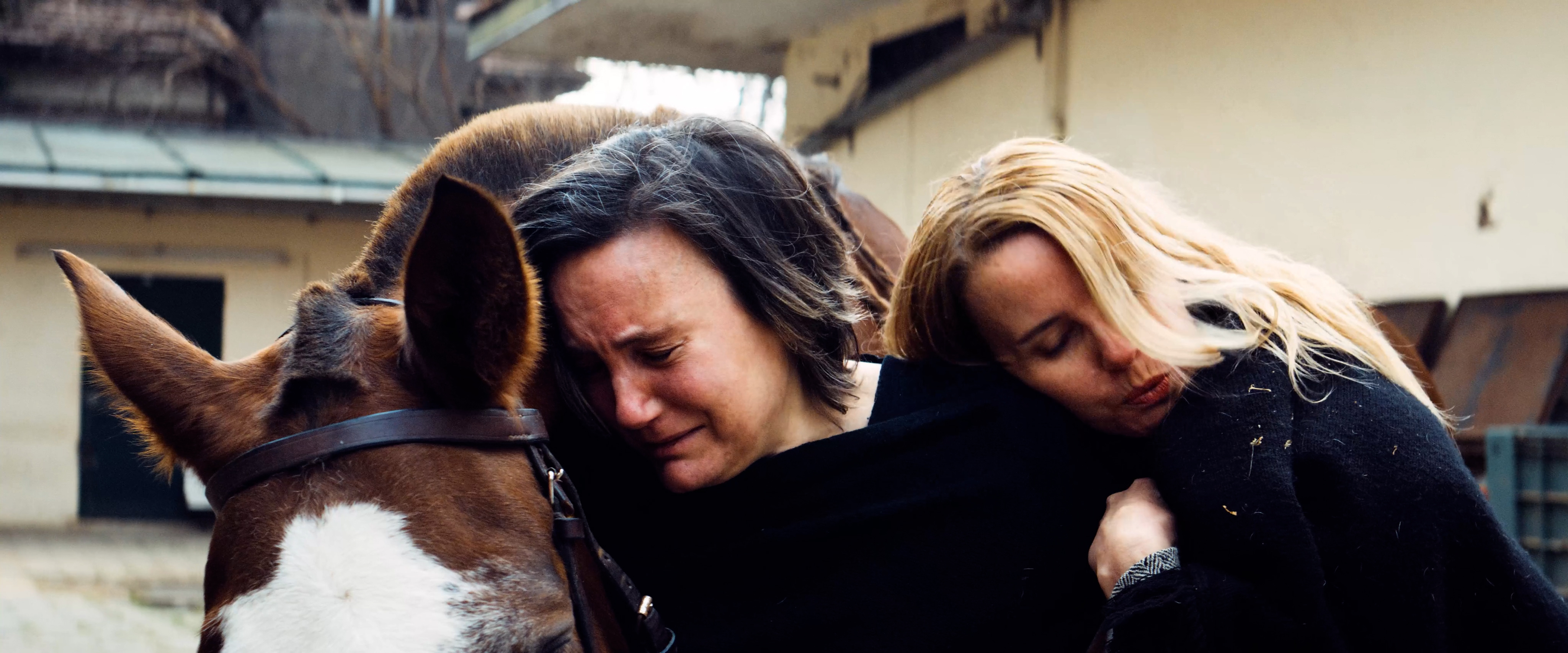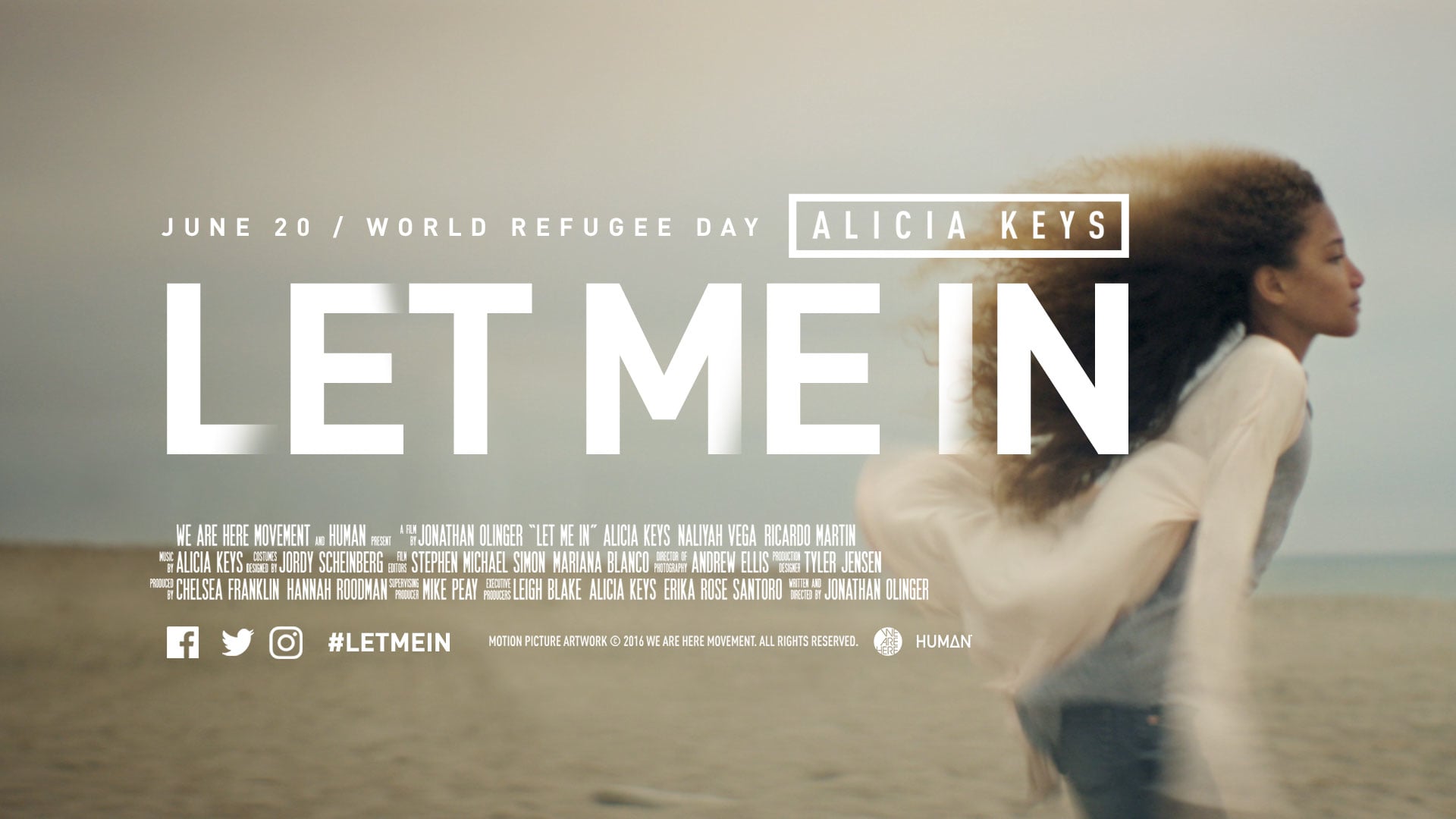
LET ME IN is a 2016 short film, written and directed by Jonathan Olinger and starring Alicia Keys, that imagines the refugee crisis unfolding on American soil: a Los Angeles family forced to flee across the border into Mexico. It premiered online on TIDAL on World Refugee Day with Keys' song "Hallelujah." A decade on, its central move, which we call narrative inversion, is still one of the most useful tools we know for issues audiences have learned to scroll past.
By 2016, the refugee crisis had become a story that people felt they already knew. The images were familiar: boats, fences, camps, crowds at a border. Advocacy leaned on statistics and on distant pictures, and the public response had been dulled by what is usually called compassion fatigue. The issue was also politically charged in the United States. Showing more of the same images would not change how people felt. We needed to change where they were standing when they watched.
What is the Alicia Keys film LET ME IN about?
LET ME IN follows one family in Los Angeles whose life breaks apart when violence erupts in their city. Along with thousands of other displaced Americans, they leave their home and seek refuge by crossing the border into Mexico. Alicia Keys stars, and the film introduces Naliyah Vega and Ricardo Martin. It is scored with "Hallelujah," a new Keys song at the time.
The film was made by We Are Here and HUMAN, and executive produced by Alicia Keys, Erika Rose Santoro and Leigh Blake. After a surprise screening at the Tribeca Film Festival, which Remezcla attended, it premiered online on TIDAL on 20 June 2016, World Refugee Day, together with the song. We Are Here partnered with CARE, Oxfam and War Child, and the film was released across TIDAL, Facebook, YouTube and the We Are Here site, which pointed viewers toward refugee-focused organizations where they could give and act. Global Citizen was among the outlets that covered the release.
What is narrative inversion in advocacy?
Narrative inversion is the technique of keeping a story's events intact while reversing who it happens to, so the audience meets the experience as their own rather than as someone else's. LET ME IN was inspired by the real stories of refugees around the world: the flight, the fear for family, the crossing, the dependence on strangers at a border. What changes is the geography. The streets are in Los Angeles. The border is the one to the south. The people asking to be let in are Americans.
That shift changes the question an American viewer asks. Watching familiar footage from far away, the question is "what should be done about them?" Watching a family who could live on your street, the question becomes "what would I want someone to do for us?" The first question invites debate. The second invites recognition, and recognition is where empathy starts.
The images of a crisis can wear out. The experience of being the one who has to leave does not.
We made one more deliberate choice in the edit: the film holds back the word "refugee" until the very end. A label lets a viewer file a story away before it has done its work. By withholding it, the film lets the audience live inside the family's experience first, and only then hands them the word for what they have just watched.
How do you build empathy for refugees through film?
You build empathy through film by giving the audience a person to follow and a reason to see themselves in that person, before you give them any argument. In LET ME IN, that meant three craft decisions working together.
- Cinematic scale on a real crisis. We shot it with the production values audiences associate with feature films, so the story felt urgent and present, closer to cinema than to a public service announcement.
- A family at the center. The film follows one family rather than a crowd. Wanting to keep your family safe is a feeling almost every viewer shares, whatever they think about immigration policy.
- Music as the emotional through-line. "Hallelujah" carries the film, and it gave the piece a second life as part of an artist's release.
Alicia Keys' platform mattered as well. A celebrity does not make a film good, but the right artist, genuinely committed to a cause, can carry a story into spaces that rarely hear about humanitarian policy. That reach, combined with a premiere on a date the world already associated with the issue, gave the film a moment.
Why the technique still works, a decade on
Ten years later, the conditions that made LET ME IN necessary have not gone away. Many urgent issues now arrive in the same worn imagery, and audiences have learned to scroll past them. Narrative inversion is one of the most dependable tools we know for interrupting that habit. Instead of asking people to care more about a stranger, it asks them to imagine a stranger's experience happening to the people they love.
The technique has limits, and they are worth naming. It works only when the source experience is honored, not borrowed for effect, which is why LET ME IN was drawn from real refugee stories. And it works best as an opening, not a full argument. The film's job was to make a viewer feel the question. The partner organizations and the We Are Here site were there to help them answer it.
We still return to this film when a client brings us an issue that the public believes it already understands. The question we ask is the same one we asked in 2016: what would this look like if it happened here, to us?
Questions people ask
Who directed LET ME IN with Alicia Keys?
LET ME IN was written and directed by Jonathan Olinger of HUMAN. It stars Alicia Keys and introduces Naliyah Vega and Ricardo Martin, and it was produced by We Are Here and HUMAN.
When was LET ME IN released?
LET ME IN premiered online on TIDAL on 20 June 2016, World Refugee Day, alongside Alicia Keys' song "Hallelujah," after a surprise screening at the Tribeca Film Festival. The film was then released across TIDAL, Facebook, YouTube and the We Are Here site, and We Are Here partnered with CARE, Oxfam and War Child.
What song is in the LET ME IN short film?
The film is scored with "Hallelujah," a then-new song by Alicia Keys. The film premiered on TIDAL alongside the song on World Refugee Day 2016, so the music became part of how the story traveled.
Watch the film on the LET ME IN case study, and if you are working on an issue the public believes it already understands, apply to work with us.